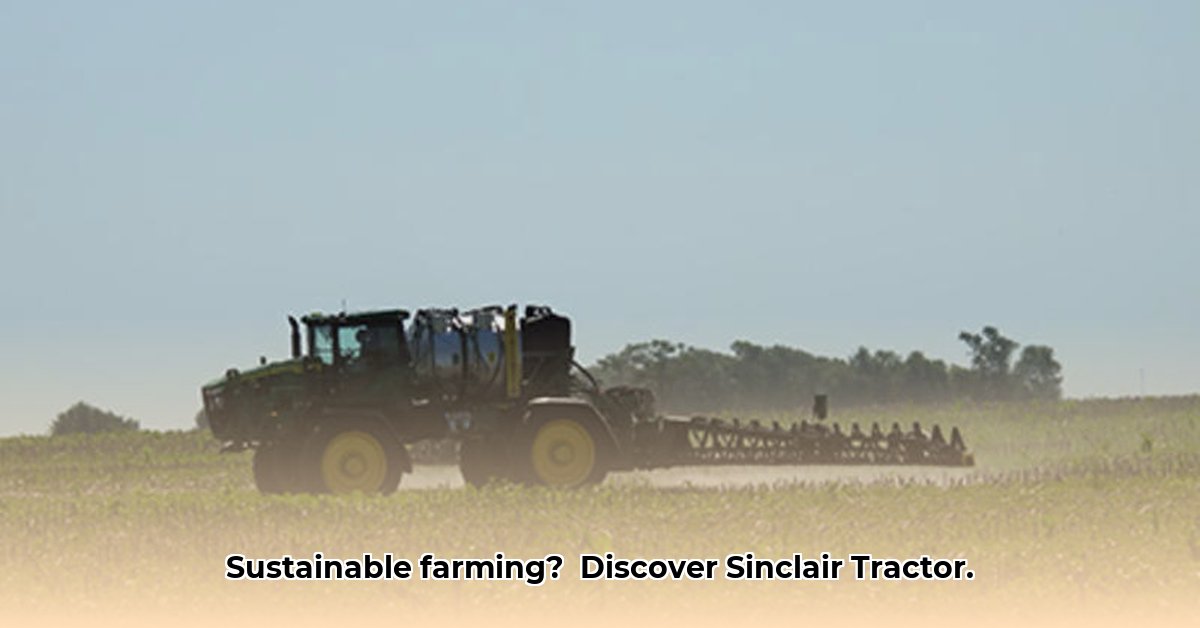
Sinclair Tractor, headquartered in Fairfield, Iowa, has significantly expanded its presence across the Midwest, boasting thirteen dealerships spanning Iowa, Illinois, and Missouri since its 1998 inception. This rapid growth demonstrates a strong market position and adaptability within the competitive agricultural equipment sector. However, a comprehensive assessment of Sinclair's contribution to sustainable agriculture requires further investigation beyond its impressive market expansion. How much of this growth is attributed to sustainable practices? For more on efficient farm equipment, see this helpful resource.
More Than Just Tractors: Serving a Diverse Client Base
Sinclair Tractor's clientele extends beyond traditional farmers, encompassing landscapers and contractors. This diversification indicates a strategic approach to market penetration and resilience. This broad reach minimizes reliance on a single sector, but what specific equipment and services contribute most to sustainable farming practices? This detail is crucial to understanding the true extent of their environmental contribution.
Understanding Sinclair's Sustainability Efforts: The Need for Transparency
While Sinclair's growth is demonstrably impressive, detailed information regarding their specific initiatives promoting sustainable agriculture remains limited. What equipment types are predominantly sold? Do they prioritize fuel-efficient models and precision farming technologies? What partnerships, if any, exist with organizations focused on sustainable practices? Addressing these knowledge gaps is crucial for a complete evaluation of their impact.
Analyzing Sinclair's Current Position: A Data-Driven Approach
Sinclair's location within a major agricultural region suggests strong alignment with regional farming needs and challenges. Their product offerings likely cater to the specific climate and soil conditions of the Midwest. But how many fuel-efficient tractors have they actually sold? How many farmers have successfully adopted precision agriculture techniques with their guidance? Concrete data is essential to accurately assess their environmental impact.
A Strategic Roadmap for Sustainable Growth: Short-Term and Long-Term Goals
Even with limited publicly available data, a strategic framework can be outlined to amplify Sinclair Tractor's positive influence on sustainable agriculture. This plan focuses on actionable steps for various stakeholders:
A Strategic Plan for Sustainable Growth
| Stakeholder | Short-Term Goals (Next 1-2 Years) | Long-Term Goals (3-5 Years and Beyond) |
|---|---|---|
| Sinclair Tractor | Conduct a thorough analysis of sales data to identify trends in fuel-efficient and precision agriculture equipment sales. Develop and implement targeted marketing strategies emphasizing the environmental benefits of their offerings. | Invest in comprehensive employee training programs on sustainable farming practices. Forge stronger partnerships with manufacturers of sustainable agricultural equipment. Explore and implement carbon offsetting programs. |
| Farmers and Agricultural Businesses | Thoroughly investigate the fuel-efficient equipment and precision agriculture technologies offered by Sinclair. Actively explore methods to enhance operational efficiency and minimize environmental impact. | Actively participate in training workshops provided by Sinclair. Explore various financing options tailored to sustainable agricultural equipment acquisitions. Adopt data-driven farming practices. |
| Government Agencies & NGOs | Collaborate with Sinclair to promote sustainable equipment adoption using educational initiatives and financial incentives. | Collaborate to develop and implement policies that incentivize the acquisition and utilization of sustainable agricultural equipment. Actively support research focused on innovative sustainable farming methods. |
The Crucial Interplay of Sinclair and Sustainable Agriculture's Future
Sinclair Tractor's future trajectory is directly tied to the prevailing trend towards sustainable agricultural practices. By proactively increasing the transparency of their sustainability initiatives, providing data-driven evidence of their contributions, Sinclair can substantially improve its reputation and attract environmentally conscious customers. Further research, encompassing detailed sales figures, participation in sustainability programs, and documented customer success stories, is necessary for a complete understanding of their overall impact. This enhanced understanding will ultimately benefit not only Sinclair but the entire agricultural community within the Midwest and beyond. The pursuit of sustainable farming is an ongoing journey, and organizations like Sinclair play a pivotal role in this transition.
How to Choose Fuel-Efficient Farm Equipment for Sustainable Agriculture
Key Takeaways:
- Investing in fuel-efficient tractors offers substantial reductions in operating costs and environmental impact.
- Selecting the ideal tractor necessitates a careful assessment of individual farm requirements and operational needs.
- Several critical factors influence fuel consumption and overall efficiency. Consider farm size, crop type, and workload when making your decision.
- Explore available financing options and government incentives to simplify the transition to more sustainable machinery.
- Long-term strategic planning should encompass exploration of alternative fuels and the adoption of precision agriculture technologies.
Sinclair Tractor Fairfield, Iowa: A Case Study in Sustainable Practices
Sinclair Tractor's operations in Fairfield, Iowa, represent a significant case study in how a farm equipment provider is responding to the growing demand for sustainable agricultural practices. While precise data regarding their specific fuel efficiency initiatives requires further investigation, an analysis of their potential contributions to sustainable agriculture is possible.
How does Sinclair contribute? It is reasonable to assume they offer a selection of tractors with varying degrees of fuel efficiency, catering to the needs of diverse farming operations. Their market success suggests a significant demand for such sustainable solutions. What does this mean for farmers? It indicates a range of choices to optimize both their economic and environmental performance.
Assessing Fuel Efficiency in Farm Equipment: Key Considerations
Selecting fuel-efficient equipment goes beyond simply reviewing advertised specifications. Several crucial factors significantly affect fuel consumption and overall efficiency:
Engine Technology: Modern engine designs incorporate advanced technologies that optimize fuel delivery and combustion, resulting in improved fuel economy. Look for features like common-rail fuel injection or advanced turbocharging systems.
Transmission: Efficient transmissions (CVT, powershift) enhance fuel efficiency by enabling the engine to operate consistently within its optimal power range.
Hydraulic System: Modern hydraulic systems are designed with greater efficiency. Look for systems utilizing load-sensing pumps, which only provide the necessary hydraulic power, minimizing unnecessary engine load and fuel consumption.
Tire Selection: Properly inflated and appropriately sized tires minimize rolling resistance, resulting in improved fuel performance.
Operational Practices: Fuel efficiency is also influenced by the operator's skills and the farm's overall management practices. Precision agriculture techniques, such as GPS-guided planting and fertilization, can dramatically reduce fuel consumption.
Evaluating Sinclair's Potential: A Farmer's Perspective
Consider the position of an Iowa farmer planning to update their equipment. High fuel prices directly impact profit margins. For many, fuel efficiency is a top priority. Sinclair's presence in the market suggests a viable pathway for farmers seeking improved cost savings while embracing environmental responsibility.
Beyond Fuel Efficiency: A Holistic View of Sustainability
While fuel efficiency is undoubtedly crucial, it only represents one aspect of sustainable agriculture. A holistic approach encompasses:
Reduced Emissions: Minimizing greenhouse gas emissions is paramount. This involves selecting equipment with low emission ratings and potentially exploring alternative fuels such as biodiesel.
Durability and Longevity: Investing in robust, durable, and long-lasting equipment reduces the overall environmental impact compared to frequent replacements.
Maintenance Practices: Regular and proactive maintenance prevents breakdowns, minimizes wasted fuel, and extends the equipment's lifespan, thereby contributing to its overall sustainability.
Choosing the right equipment requires meticulous analysis. Don't solely focus on initial cost. Thoroughly consider long-term costs, fuel savings, environmental impact, and ongoing maintenance requirements.